Archive for miscommunication

Ignore these critical considerations when you write, and you could invite a communication disaster.

Written messages just might be the most dangerous form of communication. There are so many ways that they can go wrong and lead to miscommunication. If you have ever written a message that someone else misunderstood, then you know what I mean.

While, the general rules of effective communication apply equally to both spoken and written forms, there are some special factors to remember when you communicate in writing.

I covered some general, big-picture communication ideas a few weeks ago when I wrote about Three Critical Factors to Consider Before You Choose a Communication Technique. Today, I’m expanding the ideas in that post to add these special considerations for you to remember when you write.

When you write a message of any kind, keep in mind…

The idea of greatest interest to the reader

Most people skim written messages more than they read them – especially when people “read” on a computer screen. If you want to grab the reader’s attention so that they get your main idea, make it easy to see.

Make the main idea stand out in some way.

  • Use bullet points
  • Put the main point as early as possible in the text
  • Use formatting that makes the main point(s) easy to find

If people have to work too hard to find something that pertains to them in your message, they will likely miss it altogether.

How it will likely “sound” to the reader

In written form, people only have the voice in their own head to interpret the words you write. The reader chooses the tone that your words carry, and, in my experience, people sitting alone with your words tend to read them more negatively and more aggressively than you intended them.  As a result, communicating sensitive issues in writing will likely take more time and more words than communicating the same message in spoken form.

Since you will not be present when they read what you wrote so that you can adjust your delivery or clarify your message, it is doubly important to consider the reader’s DISC style (if you know it) when you communicate in writing. If you are task-oriented, remember to work on “softening” your words for people-oriented readers. If you are people-oriented, remember to get to the point faster for task-oriented readers.

Where (and in what medium) the reader will read it

If you write messages of any kind – letters, emails, texts, or social media updates – remember that the person reading your words will likely not read your words in the same environment where you wrote them. You might be dashing through an airport quickly responding on your phone while your colleague reads the message quietly in his office. Or, you could compose it in your office while he reads the message on his phone dashing through an airport.

Always consider the reader’s environment in your message. Will they read it on paper or on a computer screen, on a wide-screen monitor or on a smart phone? Every context is different. Every context creates a different communication challenge for your reader.

Here’s a bonus thought – pay attention to punctuation.

I don’t suggest that you have to know all punctuation rules and apply them perfectly. I do suggest that you should at least give it some consideration. I see many emails and text messages that look to me like the writer made no effort to follow good punctuation rules. Punctuation helps the reader know where to pause and how to better interpret your intent. Do your readers a favor with good punctuation. (If you find punctuation errors in this post, sorry. I’m not perfect in this area. I do think about it and try to catch my mistakes before publishing.)

If you have thoughts or ideas to expand these ideas, I’d love to see them. Please let me know your insights for better written communication in the comments section below.

1 Categories : Communication Skills

Have you ever taken an action – either immediately or at some later time – based on what you heard someone say only to find out after you acted (or spoke) that you did not accurately understand their statement or request?

So far, everyone I have asked this question in a face-to-face conversation answers pretty much the same way. In effect, they all say: “Yes, of course I have.” And, the truth is, so have I.

As the Irish playwright, George Bernard Shaw, said:

“The single biggest problem in communication is the illusion that it has taken place.”

The illusion that you accurately understand another person’s intended message based solely on your interpretation of his words, tone and body language is a trap that can hinder your desire to become a truly remarkable communicator. You certainly have an interpretation of what he intended to say, and you never really know if you understand correctly until you confirm it with him. Confirming mutual understanding is the feedback loop often missing in situations that lead to misunderstanding and frustration.

When you develop the ability to check your own understanding of the messages you interpret from what another person says by consciously inserting a feedback loop, you improve the odds of effectively communicating with her. Well phrased confirmation questions can help you do this gracefully and with ease to improve the odds that you get positive replies rather than snarky comebacks.

Here are five ways you can phrase a confirmation question:

  •  “Let me say back to you what I think you just said, so that I can be sure I understood you correctly…”
  • “Please correct me if I am wrong. I understood you to say ________. Is that correct?”
  • “If I hear you correctly, you are saying _____________. Is that right?”
  • “I hear you saying ____________. Is that right?”
  • “It sounds to me like you feel/think ____________. Did I understand you correctly?”

If you look closely at each question, you will see a common thought:  if a miscommunication happened, it’s my problem and not the other person’s.

You can probably find other ways to express the same idea, and I encourage you to do so. You do not want to say the same thing over and over again in the same conversation to the point that you sound like an inauthentic automaton.

This list is a good place to start your own list of confirmation questions.  I suggest that you think of others to add to your communication toolkit so that you can have many of them to pull on when you find yourself in the middle of a high-stakes conversation.

If you have other ways of confirming that you understood correctly, please add them in the comments section below.

Stuck in the pastToday, as I sat in an airport business lounge waiting for a flight, I overheard bits and pieces of another traveler’s conversation. I wasn’t trying to overhear. I just couldn’t help but overhear because his volume kept getting progressively louder.

From what I could tell, he was engaged in a bit of a conflict conversation.

I could also tell that he was making a common mistake that rarely, if ever, leads to conflict resolution and almost always leads to conflict escalation. Based on the bits and pieces of conversation that I overheard, I think the person on the other end of the phone call was making this mistake as well.

The symptoms of the mistake manifested as:

  • Justifying behaviors
  • Explaining why he was right
  • Showing the other person why he was wrong
  • Rehashing what had already happened
  • No focus on what to do the next time this situation occurred to make it turn out better

The root cause of the problem stems from focusing on the past rather than the future. I wrote about this challenge previously in my post about the 7 Deadly Sins of Conflict Resolution.

If you want to guarantee conflict escalation, keep revisiting the past — past statements, past actions, past reasons, past thinking, etc.

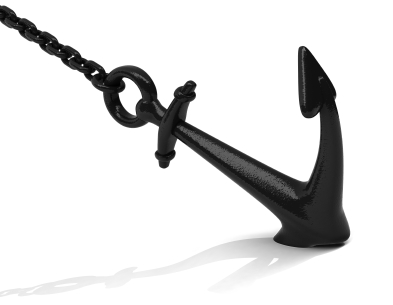
Talking about the past is like throwing out an anchor. It stops forward progress and keeps the conversation stuck in problem discussion rather than problem solving.

Problem discussion becomes negative and accusatory, if it goes on too long.

Problem solving is about finding ways to set and meet mutual expectations and how to interact with and behave towards each other so that conflicts do not recur.

If you want to productively resolve conflicts, move quickly to a future focus. Only stay in the past long enough to understand how the miscommunication or misunderstanding happened, and then look for ways you can interact with the other person in the future to stop the problem from happening again.

Escalators

In a previous post on exercising your power of choice to get conflicts under control, I mentioned some specific actions to consider using to de-escalate conflicts.

In this post, I’m expanding on three of the actions with some additional thoughts on how to put them to work in your conflict resolution repertoire.

Here are three things you can do in virtually any conflict situation to improve the outcome.

1. Apologize

I seldom see conflict situations where all of the miscommunication, misunderstanding, or misinterpretation of intentions rests entirely on one person. You might not be totally at fault for the challenge that led to the conflict. Odds are, there is something you contributed to the early stages that helped it to escalate. Whatever that behavior, word choice or tone was, apologize for it.

Don’t apologize for how the other person feels or how they interpreted your actions. You can apologize for the action itself.

Apology is a powerful way to de-escalate conflict. When you apologize, remember that apologizing for your contribution does not mean that you have to take all of the blame. Just own your contribution.


2.  Forgive

Just as you should apologize for your contribution, be ready to accept their apology or ownership of responsibility. Resist the urge to take advantage of their show of vulnerability. Just forgive graciously.

In practice, you don’t even have to wait for an apology to forgive. You can forgive simply because you chose to do so. (And you can do it without holding it over the other person. Remember the gracious part.)


3.  Listen

As a general rule, people feel less angry or frustrated when they feel understood. When you listen without interrupting, correcting, or debating, you can help the other person feel understood. When you help them feel understood, you improve the odds of de-escalating the conflict.

I don’t propose that these actions are necessarily easy to do when emotions are high and the conflict is escalating. While they might not be easy to do, they are possible to do. And they are powerful steps you can consciously apply to help conflicts move towards resolution.

0 Categories : Resolving Conflict

Group MeetingAs I write this post, I am sitting in a hotel room in Anaheim, California preparing to lead a Bud to Boss workshop. In the process of looking over my notes and thinking through the planned events tomorrow, I started reflecting on a meeting that I facilitated for a client in Indiana last week. The events of this meeting reminded me of a vitally important issue that affects group decision making dynamics:

Until people talk through their perspectives to the point that they feel heard and understood, they will find it difficult to come to a collective decision that they can all live with and act upon.

There where 18 powerful leaders from across the state of Indiana in this meeting – business leaders, educational leaders, and leaders of not-for-profit organizations. Eighteen people with different perspectives, different backgrounds, different view points, and strong opinions.

This organization is facing some pretty stiff challenges in both funding and organization. Each of these leaders is committed to the survival of the organization, and they each have different views of what their collective future looks likes.

In preparation for the meeting, I put together an agenda with a structured process designed to allow the time necessary to talk through issues with an eye towards driving decisions and commitments rather than just talk.

As we began the meeting and I led the group through the initial discussion steps, I could feel myself getting anxious. I began to get worried that we would spend too much time talking and not enough time deciding.

Remember – I built the agenda, and I started to get frustrated with the process.

And then, near the end of the meeting, we did an exercise designed to identify and rank obstacles the group needed to face in reaching their desired future. Quickly, in less than an hour, we listed, ranked and developed specific action plans for overcoming their biggest challenges.

It took us nearly four hours to reach the point that we could make a group decision. Four hours of talk about different perspectives and viewpoints so that we could drive to a conclusion in just a few minutes.

And that’s the observation that reminded me of the lesson I mentioned above.

The talking, even though it felt slow to me, was a vital part of the overall process. I’m pretty sure that if we had tried to rush or bypass those steps, we would not have been able to come to the final decisions with the unanimity of purpose and perspective that we did that day.

I believe that the process we used supported the group in coming to a conclusion, and the time to talk it out was a big part of the final success.

The next time you lead a group problem solving session, make sure you allow the time necessary to let everyone have their say. The time you invest in the process will come back to you many times over in the increased energy and productivity that the meeting generates.

Graphic by www.lumaxart.com.