Archive for motivation

Two questions I often get in workshops, from coaching clients, and in consulting engagements are:

  1. How do I work with an unmotivated person? and
  2. How do I motivate someone to work harder?

Here are the quick answers:

  1. There is no such thing as an unmotivated person. Everyone is motivated to do something. Therefore, everyone is motivated.
  2. You cannot motivate someone else to work harder. You can find what is important to them — what motivates them — and then find ways to make sure they get more of that as a reward for high-level performance.

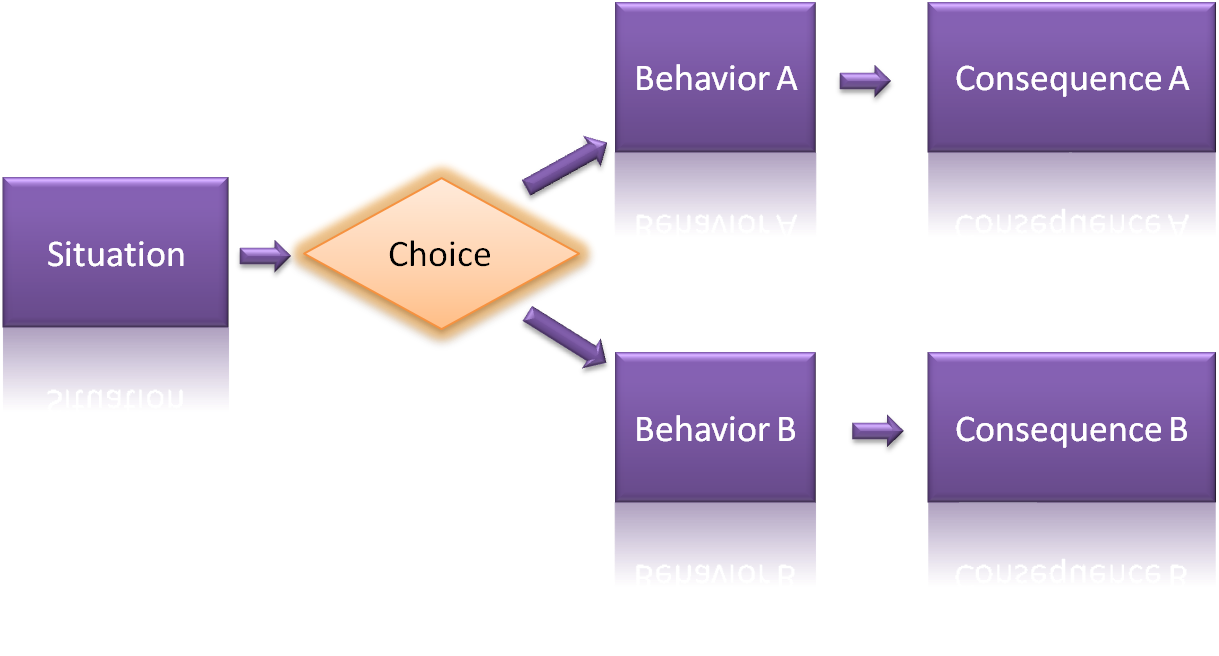
According to this model for understanding what motivates behavior, behaviors come from our choices about what he hope to experience (in some cases what we hope to avoid experiencing). So, the key to “motivating” another person is knowing what they view as a reward for working hard or doing a certain behavior. (No, I did not change my mind about your ability to motivate someone else. I’m just using the word in a figurative sense.)

As a leader working to influence the behavior of other people, here are three clues you can look for to know what motivates them to high-level performance

  1. Their personal lives
    Their hobbies and other outside work activities are clues to what they enjoy and what might motivate them to behave in certain ways or to achieve great results.
  2. Their DISC behavior style
    When you understand their behavioral style, you have at least partial insight into their needs and desires. When you understand another person’s needs and desires, you have good clues about what they might view as a positive motivator.
  3. The tasks they like to do at work
    Sometimes, you can let people do what they would prefer to do after they accomplish what they don’t want to do so that the preferred task becomes a type of reward. This approach is sometimes called Grandma’s Law: “You can have desert after you eat your broccoli.”

Over the next few posts I’ll elaborate on each of these three clues to offer some practical application tips.

Photo by Julie Rybarczyk.

This article is from the Motivation series. Use the links below to read more from this series.

5 Categories : Leadership Skills

In a recent post, I presented a simple model for understanding what drives our behavior.

According to the model, punishments (negative or unpleasant consequences) can reduce the likelihood that a behavior will repeat in the future. This observation implies that leaders can hope to eliminate “bad” behaviors by using punishment and discipline strategies.

If you face a situation where you need to eliminate inappropriate workplace (or family) behaviors, then you can apply negative consequences to achieve your goals. And, you might achieve partial success.

Using only negative consequences might eliminate a “bad” behavior. This approach will not guarantee that a “good” behavior will happen in its place.

According to the model I presented previously, we choose our behaviors from among the behaviors we perceive are available to us in a situation.

By making the consequences for one choice painful enough, you might encourage the person you are working with to choose a different behavior.  If you do not explicitly define the behavior that you would like to replace the “bad” behavior in question AND make the consequences for the new behavior positive, you run the risk of encouraging him to choose a third option that is even worse than the behavior you hoped he would change.

As you work to become a more effective leader, parent, teacher, coach, or friend, remember that only positive consequences for desired behaviors will encourage people to repeat those behaviors in the future.

When you  apply the model I wrote about previously, remember to:

  • Beware of perception error
  • Understand the application of both positive and negative consequences
  • Explore all consequences the other person might experience (both tangible and emotional). In other words, think beyond the external consequences that you “apply” to the other person.

Most importantly, remember that…

You cannot punish people into good behavior.

Photo by Ken_Mayer.
2 Categories : Leadership Skills, Parenting

The diagram above shows a simplified model for better understanding what drives behavior.

Since people often spend their lives studying and understanding what really drives our behavior, I am pretty confident that I cannot hope to fully cover the topic in this short post.

I can provide a quick overview you can use to diagnose what’s happening in your interactions with other people and how you might be able to modify your approaches to get better results, have more fun, experience more satisfying relationships, and make sense of what you see people do.

Here’s a simplified description of what the model shows:

  1. We enter a situation.
  2. We anticipate the outcome we want from that situation.
  3. We choose the behavior that (we hope) gives us that outcome.

This description leads to the following implication:

We choose our behaviors based on what we expect to happen after we do them.

The consequence is what we expect that we will experience as a result of our behaviors. In this context, a consequence is anything that we experience as a result of our behavior. A consequence might be some external thing we receive or get because of our behavior. A consequence can also be the feelings we get from the behavior.

As you might guess, we tend to avoid negative consequences and to pursue positive consequences.  As a result, negative consequences (like punishments) tend to discourage repeating behaviors and positive consequences (like rewards) tend to encourage behaviors to repeat in the future.

Part of the challenge with applying this model in practice comes from a common error known as perception error. Perception error happens because not every person sees every consequence the same way. What one person sees as a reward; a different person might see as a punishment.

You can use the  DISC model to gain insights to avoid perception error.

For example, public recognition might be a reward for an outgoing, people-oriented person and it might be a punishment for a reserved, people-oriented person.

You can also apply the 5 Be’s of Motivation as you work with other people to encourage better interactions and results.

Remember, this is a very quick, very simplified description of this model and it’s implications. I’ll offer more insights in future posts.

What creates engagement? How do you build it, spread it , and maintain it?

I don’t propose that I know the definitive answer to these questions. I do have an observation…

People get engaged and enthusiastic about something they believe in.

You’re probably thinking: “Really Guy. That’s all you’ve got?” And my answer is, pretty much.

It’s not really rocket science. It’s not a mystery. It’s not the Holy Grail. It really does exist. Engagement happens when people believe in what they are doing.

Without that belief, the work is only about the paycheck.

So, the follow-up question becomes, how do you create the belief that leads to engagement.

My answer to this question is also pretty simple: build relationships.

Here’s a quick story to illustrate my point…

It’s nearly 10:00 pm on a Sunday night, and I’m working to get everything ready for the official launch day, now two days away, for the book I co-authored with Kevin Eikenberry, From Bud to Boss: Secrets to a Successful Transition to Remarkable Leadership. While the picture above is not my desk — my desk is far to messy to show to the public right now — it does represent what’s going on in my workspace.

I have both my desktop and my laptop computers working. I’m converting video files on one and writing this post on the other. My whole weekend has been like this. I’m pretty well chained to my computers and my phone. There is a lot to do when you’re trying to successfully launch a book into the marketplace.

The surprising thing is not that Kevin and I, the authors, have been working almost non-stop on book launch activities since the middle of last week. You would expect the people with their names on the cover to have a heavily vested interest in the success of the book.

Here’s what is rather surprising: several other people have also been working with nearly the same intensity and focus.

And it’s not just the people close to us. We also have a very long list of bloggers, podcasters, promotional partners, and others rushing to get their blog post, audio, video, or article posted to help with our launch.

Buried in this experience is a great lesson for leaders who want to know how to create that magical ingredient of organizational success called “engagement.”

How did we create this engagement? What steps did we take? What activities happened?

It’s simple. We built relationships.

Yes, we did lots of technical work, writing, and web site building. And, in the end, it was relationships that created the engagement.

We built relationships using phone calls, Skype calls, emails, text messages, letters, tweets, blog posts, interviews, and meetings. On the surface, these activities seem to be about the book and “getting the word out.” In the end, the activities were about building relationships more than they were about getting our message out.

The relationships gave us the opportunity to share our excitement with others. The relationships built the bridge that let other people catch that excitement. The excitement built belief, and the belief built engagement.

The lesson for leaders? Start with relationships, and you’ll likely wind up with engagement.

Photo by Martin Cathrae.
0 Categories : Leadership Skills

This morning, I read a great post by my friend and colleague Kevin Eikenberry.  In this post, Kevin makes a great point we can all learn from the campaign process that those of us in the United States have been watching for the last few weeks.

In addition to triggering some amplifying thoughts for today, it reminded me of a post I wrote several months ago on Why You Shouldn’t Take Conflict Resolution Lessons From Politicians.

If you want to become a better communicator, I recommend that you read his post, and I offer the following thoughts to build on Kevin’s observations.

As I lead workshops on conflict resolution, leadership, team dynamics, and communication skills, this communication tip frequently comes to the surface for discussion:

Say what you DO want rather than what you DON’T want.

To illustrate the power of this tip, imagine a young child walking across your kitchen with a cup of milk.

Assuming that you want them to get the cup safely to a counter top without spilling it, you could say:

  1. Don’t spill that milk. – or -
  2. Please be careful with that cup.

The first statement says what you DON’T want. The second, and more powerful statement, says what you DO want.

Photo by JoelMontes