Archive for Parenting – Page 2

In previous posts, I have written about a model for understanding what motivates behavior and three clues you can use to find what motivates another person.

Today, I’ll share some quick insights about what motivates people based on their DISC behavioral style.

A person who has outgoing and task-oriented (Dominant) traits is often motivated by:

  • Solving problems
  • Conquering challenging situations
  • Getting results

And they will often prefer to work at a fast pace with a focus on quick results and direct action.

A person who has outgoing and people-oriented (Inspiring) traits is often motivated by:

  • The opportunity to interact with others
  • Public recognition
  • Varied activities

And they will often prefer to work at a fast pace with a focus on doing things in a fun way that does not require high attention to detail.

A person who has reserved and people-oriented (Supp0rtive) traits is often motivated by:

  • Teamwork
  • The opportunity to help others
  • Feeling appreciated for their contribution

And they will often prefer to work at a steady pace with a focus on doing the work process in a way that minimizes risk and strengthens relationships.

A person who has reserved and task-oriented (Cautious) traits is often motivated by:

  • Structuring or organizing things
  • Researching or searching for information
  • Finding the “right” solution for a problem

And they will often prefer to work alone with a focus on details and proper structure.

As you work to apply this information in your personal and professional life, remember that people have varying degrees of all of these traits in their behavioral style blends and that you are likely to observe at least two of the four styles to a significant degree in most people.

The information in this post is only intended to give you a basic framework for understanding what might motivate another person. It is not intended as a complete and exhaustive description of how the DISC model might reveal motivational patterns and preferences.

1 Categories : Leadership Skills, Parenting

Many leaders struggle with finding ways to motivate people to higher level performance.

I have already written that you cannot motivate another person. So, let’s set aside the idea that the leader provides the motivation and move on to the idea that a leader can learn to identify the things that do motivate the people on his or her team.

In previous posts, I wrote about Three Clues You Can Use to Find What Motivates Another Person and A Simple Model for Understanding What Drives Behavior. In this post, I’m offering a thought to expand the idea that you can look at a person’s hobbies and interests to find clues about what motivates him and then apply that insight as you assign and delegate tasks.

Current motivation research, like the research Daniel Pink shares in Drive: The Surprising Truth About What Motivates Us, indicates that excessive reliance on extrinsic motivators — rewards, praise and prizes — can eventually have a negative impact on overall motivation.

A quick look at the model I shared previously could lead to the conclusion that the consequences referenced in that model refer only to externally applied rewards, prizes, bonuses, recognition, etc.

A deeper look reveals that a consequence is anything a person experiences as a result of her behavior. So, the emotions and personal satisfaction that people experience from their behaviors can be consequences that drive behavior. These emotions fall into the category of intrinsic rather than extrinsic motivators, and it is these emotions that people’s hobbies often reveal.

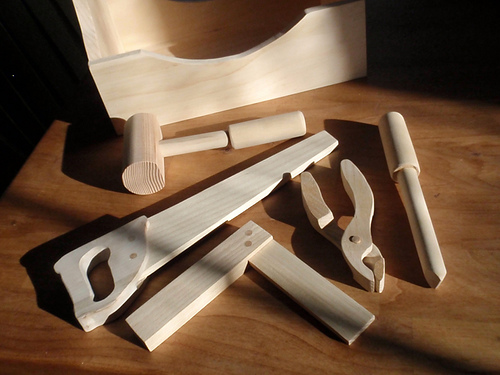
For example, I like woodworking, writing, building websites, working on my house, landscaping, and cooking. These activities show that part of what motivates me is analyzing and solving problems. When I do things that give me that opportunity, the work itself becomes a motivator because it gives me the emotional satisfaction of analyzing and solving a problem.

These hobbies also reveal that I tend to like working alone. I can (and do) call on customers and socialize with people. However, these activities are work to me.

My hobbies are play to me.

Work tires and play energizes.

A wise leader hoping to “motivate” me to higher performance would, as much as possible within the confines of the business need, give me assignments that maximized my ability to analyze and solve problems.

As you look for what motivates your team members, remember to look at their hobbies and interests for clues you can use to work with them in a way that taps their intrinsic motivation as much as possible.

Side note – Parents can use this idea with their children as well. What activities energize your kids and which ones drain them?

0 Categories : Leadership Skills, Parenting

In a recent post, I presented a simple model for understanding what drives our behavior.

According to the model, punishments (negative or unpleasant consequences) can reduce the likelihood that a behavior will repeat in the future. This observation implies that leaders can hope to eliminate “bad” behaviors by using punishment and discipline strategies.

If you face a situation where you need to eliminate inappropriate workplace (or family) behaviors, then you can apply negative consequences to achieve your goals. And, you might achieve partial success.

Using only negative consequences might eliminate a “bad” behavior. This approach will not guarantee that a “good” behavior will happen in its place.

According to the model I presented previously, we choose our behaviors from among the behaviors we perceive are available to us in a situation.

By making the consequences for one choice painful enough, you might encourage the person you are working with to choose a different behavior.  If you do not explicitly define the behavior that you would like to replace the “bad” behavior in question AND make the consequences for the new behavior positive, you run the risk of encouraging him to choose a third option that is even worse than the behavior you hoped he would change.

As you work to become a more effective leader, parent, teacher, coach, or friend, remember that only positive consequences for desired behaviors will encourage people to repeat those behaviors in the future.

When you  apply the model I wrote about previously, remember to:

  • Beware of perception error
  • Understand the application of both positive and negative consequences
  • Explore all consequences the other person might experience (both tangible and emotional). In other words, think beyond the external consequences that you “apply” to the other person.

Most importantly, remember that…

You cannot punish people into good behavior.

Photo by Ken_Mayer.
2 Categories : Leadership Skills, Parenting

The diagram above shows a simplified model for better understanding what drives behavior.

Since people often spend their lives studying and understanding what really drives our behavior, I am pretty confident that I cannot hope to fully cover the topic in this short post.

I can provide a quick overview you can use to diagnose what’s happening in your interactions with other people and how you might be able to modify your approaches to get better results, have more fun, experience more satisfying relationships, and make sense of what you see people do.

Here’s a simplified description of what the model shows:

  1. We enter a situation.
  2. We anticipate the outcome we want from that situation.
  3. We choose the behavior that (we hope) gives us that outcome.

This description leads to the following implication:

We choose our behaviors based on what we expect to happen after we do them.

The consequence is what we expect that we will experience as a result of our behaviors. In this context, a consequence is anything that we experience as a result of our behavior. A consequence might be some external thing we receive or get because of our behavior. A consequence can also be the feelings we get from the behavior.

As you might guess, we tend to avoid negative consequences and to pursue positive consequences.  As a result, negative consequences (like punishments) tend to discourage repeating behaviors and positive consequences (like rewards) tend to encourage behaviors to repeat in the future.

Part of the challenge with applying this model in practice comes from a common error known as perception error. Perception error happens because not every person sees every consequence the same way. What one person sees as a reward; a different person might see as a punishment.

You can use the  DISC model to gain insights to avoid perception error.

For example, public recognition might be a reward for an outgoing, people-oriented person and it might be a punishment for a reserved, people-oriented person.

You can also apply the 5 Be’s of Motivation as you work with other people to encourage better interactions and results.

Remember, this is a very quick, very simplified description of this model and it’s implications. I’ll offer more insights in future posts.

Last week, I saw a report on television about the number of children that have likely been misdiagnosed as ADD/ADHD. As I watched the television piece, I was reminded of a common problem I see when people start to apply the DISC model of human behavior.

Here’s the challenge:

People often use disorder descriptions to speak about normal behavior.

The  most common misdiagnosis I have observed are:

D behaviors described as if they are indicative of Oppositional Defiant Disorder.

I behaviors described as if they are indicative of ADD/ADHD.

S behaviors described as if they are indicative of Social Anxiety Disorder.

C behaviors described as if they are indicative of Obsessive Compulsive Disorder (OCD).

While it might seem funny to some people to use the illness descriptions to speak about normal behaviors, I don’t really find it that humorous. In fact, I find it a bit offensive for several reasons:

  • Using illness descriptions to speak about normal behaviors minimizes the frustration and struggle of people who do have the psychological condition.
  • Using an illness description to speak about someone who does not have the illness implies that their behavior is, in some way, bad or wrong rather than just driven by different perspectives.

If you have read much of my writing yet, you know that I am a strong proponent of using the DISC model as a way to better understand how another person might see a situation and how I might best adapt to connect with them. I hope you also see that I strongly disagree with any attempt to use the model to label or artificially categorize people.

Generally, I have seen illness descriptions used by people to describe other people with the opposite style. For example, people with strong Cautious traits saying that people with strong Influencing traits are ADD/ADHD. Or people with high Inspiring traits saying that people with strong Cautious traits are OCD.

If you want to use the model to communicate more effectively, connect with others faster, and to build better relationships, I encourage you to beware of the temptation to use illness descriptions for any of the four primary behavior styles.